DB design
Some database terms to know
Access organizes your information into tables: lists of rows and columns reminiscent of an accountant’s pad or a spreadsheet. In a simple database, you might have only one table. For most databases you will need more than one. For example, you might have a table that stores information about products, another table that stores information about orders, and another table with information about customers.
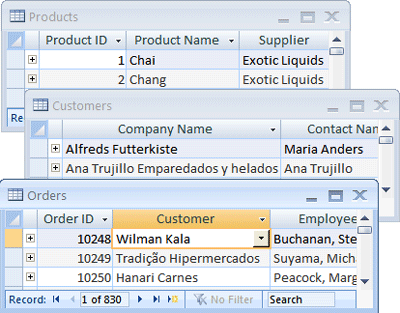
Each row is more correctly called a record, and each column, a field. A record is a meaningful and consistent way to combine information about something. A field is a single item of information — an item type that appears in every record. In the Products table, for instance, each row or record would hold information about one product. Each column or field holds some type of information about that product, such as its name or price.
What is good database design?
Certain principles guide the database design process. The first principle is that duplicate information (also called redundant data) is bad, because it wastes space and increases the likelihood of errors and inconsistencies. The second principle is that the correctness and completeness of information is important. If your database contains incorrect information, any reports that pull information from the database will also contain incorrect information. As a result, any decisions you make that are based on those reports will then be misinformed.
A good database design is, therefore, one that:
-
Divides your information into subject-based tables to reduce redundant data.
-
Provides Access with the information it requires to join the information in the tables together as needed.
-
Helps support and ensure the accuracy and integrity of your information.
-
Accommodates your data processing and reporting needs.
Topic Participants
Divya S